Special feature on ‘Science Year 2026 – Medicine of the Future’
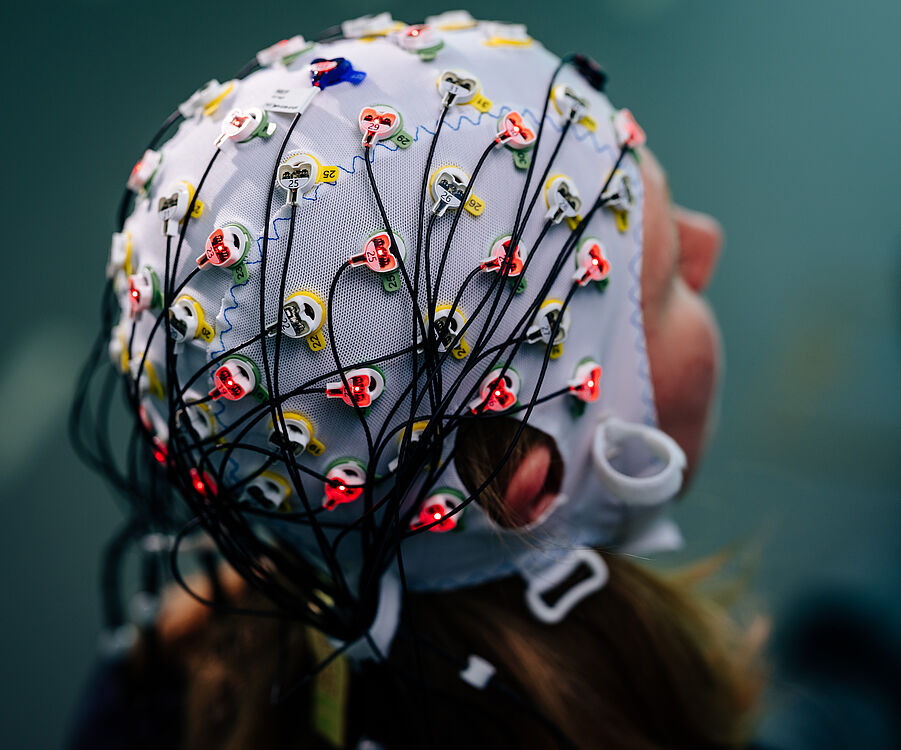
Health is one of the most important prerequisites for a good life. That is why the Science Year 2026 is all about the medicine of the future. Research and development are consistently working on ever more innovative, effective and less invasive technologies to maintain or restore physical and mental wellbeing. Find out how researchers at Paderborn University are contributing to these developments in our special feature. The ‘Years of Science’ are an initiative of the Federal Ministry of Research, Technology and Space (BMFTR) in collaboration with Wissenschaft im Dialog (WiD).
Medicine of the Future
The number of older people and those with chronic conditions is growing steadily. This is accompanied by a rising demand for rehabilitation and medical care. Technological and social innovations can help to overcome these challenges. Although Paderborn University does not have its own medical school, our researchers are developing technologies, products and methods that improve diagnostics, prevention and treatments.
Medical research at Paderborn University
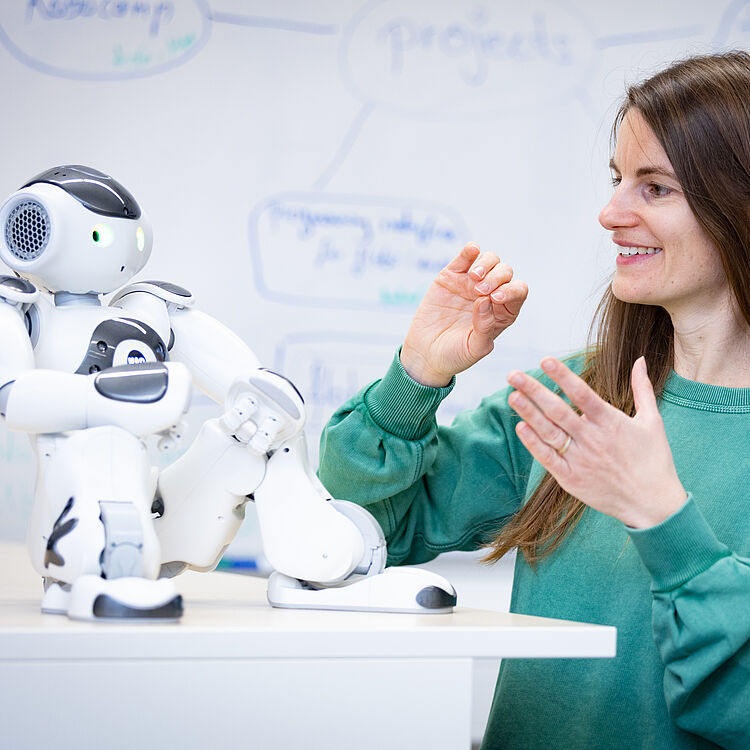
Artificial intelligence (AI) has long since found its way into operating theatres around the world. It draws up surgical plans, interprets X-ray images and controls robotic arms that perform the most delicate procedures. In Collaborative Research Centre 318 ‘Constructing Explainability’, for example, scientists are investigating how AI can work alongside doctors as equals and help them make better diagnoses. They are developing an interactive system that supports doctors in reaching a diagnosis and verifies assumptions through dialogue with them. This is intended to make decisions transparent and traceable and to prevent misdiagnoses. A spin-off from Paderborn University is also developing AI-based technologies that analyse intraoperative image data and can derive guidance for the procedure without relying on additional tracking infrastructure.

Also in the context of intelligent technical systems is the ‘Fine-grained Access Control’ project at Paderborn University. The project aims to ensure security standards for the protection of sensitive health data in the context of Parkinson’s disease. ‘Care Data Spaces OWL’, as the overarching project, is working on secure digital spaces in which health data can be stored, shared and used responsibly – whilst those affected retain full control.

In the field of orthopaedics, researchers in Paderborn have developed a uniform standard for assessing the functionality of lower-leg or ankle orthoses using what is known as the ‘foot dummy’ and the corresponding test procedure. The newly developed dummy provides a technically and scientifically sound standard for demonstrating, for example, that the orthosis adequately immobilises the foot. On the one hand, this ensures optimal patient care. On the other hand, it offers the potential for cost savings for health insurance funds, as amputations can be avoided, for example in cases of diabetic foot syndrome.

The close interconnection between health, social and economic issues is also evident in age-related cognitive decline, which can progress to conditions such as dementia. These conditions pose challenges not only for those affected and their families, but also for the health and care system. A project at Paderborn University is investigating the age-related decline in cognitive abilities from a perspective of Business Administration and Economics. The starting point is the close link between cognition, health and mortality. The researchers are investigating how institutional frameworks and individual decisions influence this development.

At Paderborn University, the subject of medicine is also researched from a cultural studies perspective. The ‘Medical Humanities’ research area examines the experience of illness and its cultural significance across different historical periods and media. It complements clinical practice and the medical and biological sciences by offering a humanities perspective.
Research Prize 2026: ‘ML4Fouling’ project
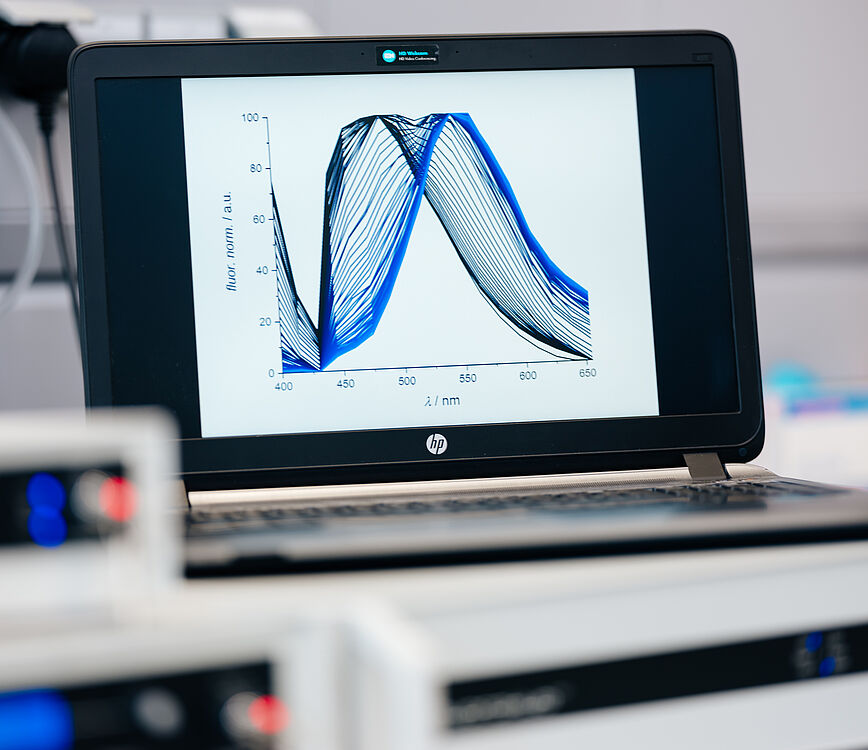
As part of the ‘ML4Fouling’ research project, scientists in Paderborn are developing an AI system that predicts the build-up of unwanted deposits on medical and industrial products, such as artificial heart valves. The interdisziplinäre team is combining laboratory experiments, computer simulations and machine learning to create a model that, for the first time, enables the calculation of fouling across different materials, fluids and flow conditions. In this way, they are laying the foundations for smarter materials and more energy-efficient industrial processes. The project was awarded the University’s 2026 Research Prize.
Institute of Sports Medicine

Physical activity is a key factor in health, fitness and disease prevention. At the the Institute of Sports Medicine at Paderborn University, researchers teach and conduct research into methods of performance and health diagnostics, as well as into training management in elite and grassroots sport. In 2014, the Institute’s Director, Prof. Dr Dr Claus Reinsberger, became the first neurologist in Germany to be appointed to a chair in sports medicine. Consequently, one of the Institute’s key areas of focus is research into the functioning of the brain and the autonomic nervous system in sport. Through their innovative research in the field of ‘Applied Neurosciences in Sports and Exercise’, the researchers engage in dialogue with national and international colleagues in the field of sports medicine.
Areas of application in sports medicine
One area of application is, for example, sport-related concussions. In the study ‘Concussion in Elite Sport in Germany’ (ConcuSs-D), researchers in Paderborn are systematically collecting data on the frequency, management and consequences of concussions in German elite sport. The study is funded by the Federal Institute for Sports Science.
In another interdisciplinary project, the researchers have been working on a wrist-worn device – a so-called ‘wearable’ – designed to predict epileptic seizures in real time. This method aims to improve the lives of people with epilepsy as cost-effectively and reliably as possible. To achieve their goal, the researchers have developed an algorithm and a prototype platform. Live data such as heart rate and skin temperature are recorded by the wearable, processed by the algorithm and, in the event of an increased likelihood of a seizure, trigger an alarm. Prof. Dr Dr Claus Reinsberger, a neurologist and Head of the Institute of Sports Medicine, and Dr-Ing Tanuj Hasija from the Institute of Electrical Engineering and Information Technology were awarded the Paderborn University Research Prize for their project as early as 2023.
![KI zur Echtzeit-Vorhersage epileptischer Anfälle [Forschungspreis der Universität Paderborn 2023]](/typo3temp/assets/_processed_/d/1/csm_youtube_ed08d2be5d192452bbb410c6b7dca1b0_0d82d17600.jpg)


