How can inclusive education be more successfully implemented in everyday school life? How can young people be supported on an individual basis and assisted in their transition from school to work? These are the questions addressed by the collaborative project ‘IvO – Inclusion on the Ground’[1]. Researchers from Paderborn University (project lead), Friedrich Schiller University Jena and the University of Rostock are working together to develop new approaches to inclusive education at vocational colleges. The focus is particularly on preparatory training courses. The project is funded with around 790,000 euros under the Empirical Educational Research programme of the Federal Ministry of Education, Family Affairs, Senior Citizens, Women and Youth (BMBFSFJ) and runs from April 2026 to March 2029.
Shaping inclusion together
The central question is how transitions between school and work can be better structured and how young people can be supported more effectively in their individual development. Many schools face the challenge that pedagogical collaboration in day-to-day practice is only structured to a limited extent, and that young people are often unable to adequately assess their own strengths and prospects.
‘IvO’ addresses precisely this interface and combines two perspectives: the development of sustainable cooperation structures within schools and the targeted support of young people in recognising and presenting their own abilities. To this end, so-called ‘self-presentation practices’ are utilised. Young people actively engage with their interests, skills and goals and make these visible. This is intended to help them find their bearings and shape their future educational and career paths in a more self-determined way.
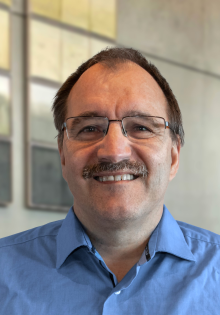
“With IvO, we want to demonstrate how inclusive education becomes effective precisely where it takes shape in everyday life. It is crucial that young people recognise their strengths and that schools, at the same time, develop structures that enable precisely this – through the collaborative efforts of all educators,” explains Prof. Dr H.-Hugo Kremer from the Faculty of Business Administration and Economics at the University of Paderborn, who heads the project consortium.
Implementation takes place in close collaboration with the participating schools. Teachers, school social workers, special needs teachers and other specialists work together in joint workshops and development forums. There, new approaches are tested, reflected upon and adapted to the specific conditions of each school. Young people are also actively involved in the development processes. The first cooperation partner is the Vocational College for Technology and Design in Gelsenkirchen.
The project builds on the research project ‘SeiP: Self-presentation practices – approaches to self-determined, multimodal competence assessment for young people with disadvantages or disabilities’, which was funded by the then Federal Ministry of Education and Research (BMBF) and concluded in 2024. Whilst that project developed didactic concepts for inclusive educational work, ‘IvO’ focuses on their implementation in everyday school life. By the end of the project, practical outcomes will be produced for various target groups in the education sector. These include guidelines for the transfer of inclusive educational innovations, concepts for the continuing/further education of multi-professional teams, and materials for the initial and continuing professional development of teachers. The aim is to embed effective inclusive educational practice in vocational colleges on a long-term basis and to strengthen young people’s educational and participation opportunities.
[1] Full title: “IvO – Inclusion on the Ground: Self-presentation practices as a catalyst for individual support, social integration and inclusive educational work in multi-professional team structures”.
This text was translated automatically.