Sustainability at Paderborn University
Why?
Our motivation
Paderborn University defines itself as a catalyst for change and a driver of a sustainable future. Our university is committed to nurturing a culture of research and education that strengthens the community, promotes ecological responsibility, and encourages long-term economic sustainability. This is achieved by recognizing planetary boundaries and being guided by the principles of social justice.
How?
Our approach
At Paderborn University, we understand sustainable development as an interdisciplinary, cross-sectional task that extends to every area of the institution—from teaching and research to administration and daily operations. We rely on collaboration across all disciplines to create sustainable solutions. A sustainable infrastructure and joint collaboration lay the foundation for embedding sustainability as a guiding principle across the university.
What?
Self-conception
We aspire to be a diverse, fair, and forward-thinking institution that contributes positively to society. In doing so, we strive to shape teaching and research through a commitment to responsibility, social justice, and mindful use of resources.
Our understanding of sustainability
Sustainable development at Paderborn University has a high strategic value and is an important part of its overall profile. Paderborn University sees itself as an educational institution, multiplier, and driver of innovation that assumes responsibility for actively helping to shape processes of societal transformation.
Sustainable development is a collective task. We therefore strengthen engagement, participation, and a culture of active co-creation at all levels of the university.
We promote equal opportunities and diversity through firmly established structures and a culture of equality, inclusion, and diversity that gives all university members equal opportunities for participation and personal development.
As a public institution, our self-understanding includes future-oriented, responsible, and transparent action that actively helps shape societal transformation.
Within the framework of our educational mission, we embed sustainable development as a cross-cutting topic in all degree programs in order to promote systemic thinking and enable students to contribute reflectively to shaping future societal processes.
Societal challenges form the guiding principle of university research. Our research addresses these challenges through a broad spectrum of academic approaches, from basic research to the analysis and visualization of societal interconnections and inter- and transdisciplinary approaches aimed at developing innovative and future-oriented solution options. The generation of knowledge—understanding how the world works—is both the foundation and the outcome of this research process.
As a cooperation partner for society, business, politics, and educational sectors, we act as a driver and multiplier and rely on close collaboration with both regional and international actors.
We strive to develop a sustainable infrastructure in both ecological and social terms. This includes reducing climate-relevant emissions, increasing the use of renewable energies, and developing social infrastructures that promote participation, health, and well-being.
Through targeted climate adaptation, we are creating a campus that is not only resilient to climatic changes but also offers attractive and livable working and learning conditions for everyone.
These guiding principles form the framework for the twelve fields of action for sustainable development at Paderborn University and underline our contribution to shaping a socially just and future-oriented society.
UPB’s sustainability matrix
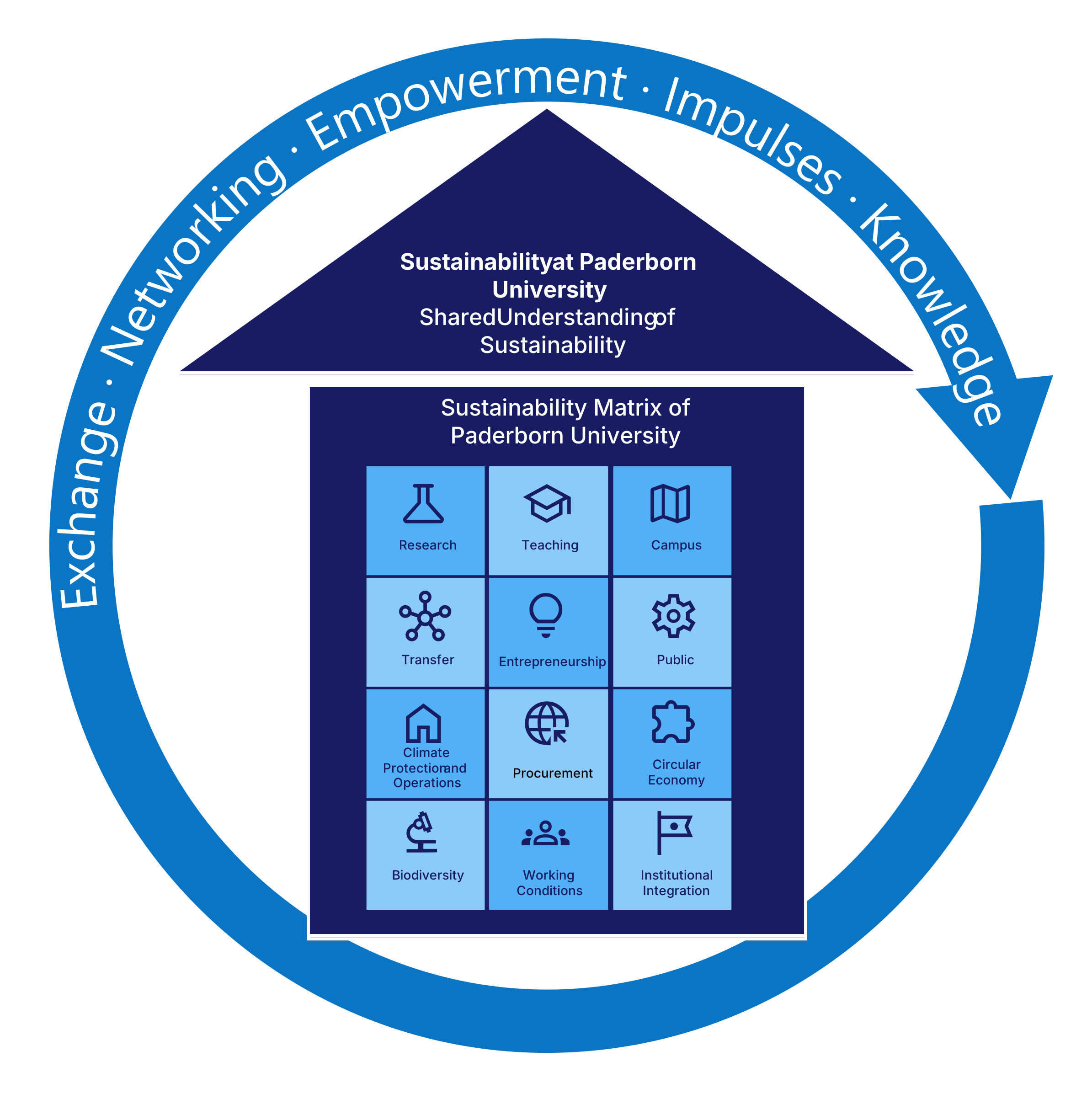
The twelve areas of action set out in the Paderborn University’s sustainability strategy form the core of its strategic direction. They are the result of a systematic, participatory development process and, as areas of action, represent the greatest levers for sustainable transformation at Paderborn University.
By defining these areas of action, Paderborn University is laying the foundations for strategic, coherent and impact-oriented further development. They highlight where Paderborn University stands today, what potential it possesses and how – through the collaboration of all its members – it fulfils its responsibility towards a sustainable society.
The areas of action
From strategic objectives to practical implementation
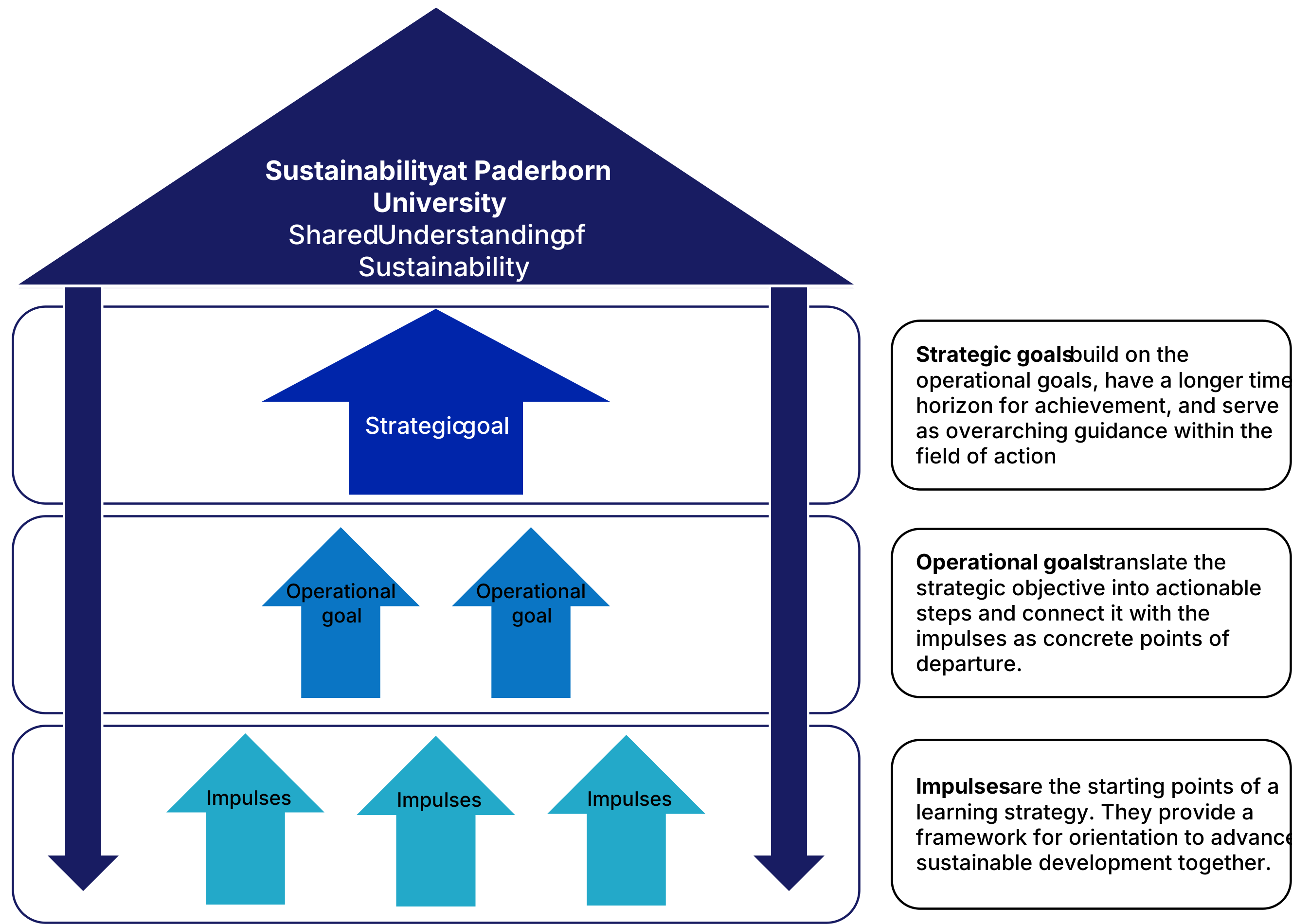
The strategic and operational objectives defined in the areas of action form the framework for the sustainable development of Paderborn University; see ‘The Paderborn Sustainability Matrix.’ However, to ensure that sustainability is effective not merely as a strategic guiding principle but as a lived practice, active implementation at all levels is crucial. It is of central importance that strategic objectives are translated into concrete processes, projects, and formats that promote joint action and embed it within the institution.
This transition from plan to action takes place step by step and in close collaboration between existing university structures—such as working groups, research centers, teaching initiatives, and administrative units. Examples of this include thematic workshops, guidelines or pilot projects that take up strategic impetus and translate it into practice. For instance, the Transfer Division can work with the Sustainability Working Group to develop guidelines for sustainable knowledge transfer, while research centers such as the Paderborn Research Centre for Sustainable Economy (PARSEC) can be specifically linked with and supported by researchers working in the field of sustainability. Furthermore, teaching initiatives – for example, as part of ‘UPB for Future’ – can deepen the integration of sustainability into teaching.
What matters is not the form but the attitude; sustainability becomes effective when it can be experienced in everyday life and empowers stakeholders to take responsibility independently. This creates a dynamic implementation process that can be continuously developed, reviewed, and adapted to new requirements.
Areas of action







The path to a sustainability strategy
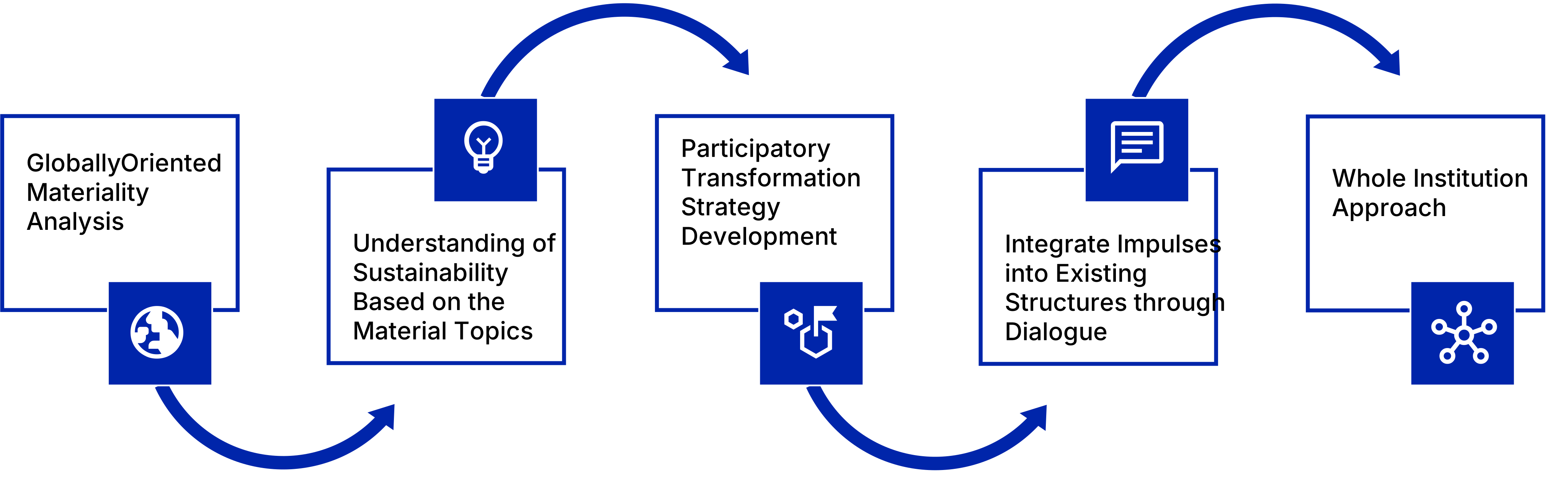
In order to systematically identify the sustainability issues that are most relevant to us, we have deliberately drawn on the methods set out in the Corporate Sustainability Reporting Directive (CSRD) and adapted them to the university context. Through a multi-stage analysis process, we have examined the impact the university has on its environment and the external factors that affect us in turn. This has enabled us to identify the issues where, as a university, we hold the greatest leverage for sustainable transformation.
The strategy itself is the result of a participatory development process in which representatives from all stakeholder groups – including faculty staff, administration staff, students and university initiatives – played an active role. Through workshops, discussions with experts and collaborative revision cycles, we have developed, critically examined and refined strategic and operational objectives. What we have produced is not a finalised document, but the start of a dynamic process: adaptable, learning and open to what lies ahead.
Further information on our process and impact monitoring can be found here.
The 2026 Sustainability Strategy
Unser Ausgangspunkt: Das Nachhaltigkeitsstrategie-Dokument als Orientierungsrahmen.

Contact Sustainability Office
Do you have any questions or suggestions?
Then please feel free to contact us.