The federal states are continuing their joint initiative ‘QuaMath – Developing the Quality of Teaching and Professional Development in Mathematics’ until the end of 2033 and are extending it to further schools. Last week, the heads of the Education Ministers’ Conference approved the second funding phase of the ten-year programme. The federal states are providing around 26 million euros for this purpose. The aim of the programme is to improve the quality of mathematics teaching. The programme is being implemented by the German Centre for Teacher Training in Mathematics (DZLM), under the leadership of the IPN – Leibniz Institute for Science and Mathematics Education, in collaboration with 14 other DZLM partner universities and the federal states. Paderborn University is also involved.
Most recently, PISA 2025 and, prior to that, the IQB Education Trend report have highlighted challenges in pupils’ mathematical skills. QuaMath focuses on a key lever for sustainable improvements: the quality of Mathematics teaching. The Standing Conference of the Ministers of Education had already launched the programme in 2021; it has been implemented in the federal states since 2023. With the second funding phase, QuaMath will in future reach schools in all 16 federal states. Initial evaluations show positive developments in the training and qualification of multipliers. The impact on teaching and learning outcomes will be examined as the programme progresses.
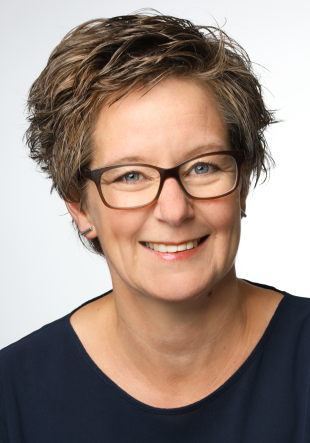
Prof. Dr Julia Bruns and Prof. Dr Uta Häsel-Weide from the Institute of Mathematics at Paderborn University are involved in the project. “We have put a great deal of work into developing the training modules and qualifying the multipliers,” said Prof. Häsel-Weide, who is responsible for the “Diagnosis and Support” module. “In the second funding phase, the aim is now to reach even more teachers so that teaching practices can develop on a broader scale. Of course, we also want to understand how teachers’ expertise is evolving and to document how diagnosis-led support is being implemented in maths lessons. This will be the focus of our research over the coming years.”
The programme aims to embed maths-related professional development and curriculum development structurally and permanently within schools – not as a one-off measure, but as a continuous, research-informed process. To this end, QuaMath systematically brings together academic research, joint state-level education policy and school practice, and works towards a shared vision of high-quality teaching. The first three of a total of eight planned school cohorts now encompass 3,082 schools and 10,923 teachers. This has slightly exceeded the original targets.
“After three years in the project, we have already been very successful in developing a shared understanding of good Mathematics teaching across all levels – from the German Centre for Teacher Training in Mathematics, through the federal states’ education authorities, to the multipliers and teachers,” says Prof. Dr Susanne Prediger, head of the QuaMath project and professor at the IPN – Leibniz Institute for Science and Mathematics Education – and at Dortmund Technical University. “Thedata show that the focus of professional development is increasingly shifting towards the underlying structures of teaching quality. Continuous subject-specific collaboration amongst teachers is particularly important for bringing about sustainable change in teaching. In the coming years of the QuaMath project, this collaboration is to be further developed on the basis of data.”
Furthermore, during the second funding phase, additional multipliers will be trained, professional development and online programmes will be further developed, and collaboration within schools will be strengthened. The research team is examining the impact step by step, right down to the pupil level. The aim is eventually to reach up to 10,000 schools – roughly one third of general education schools in Germany. This would make QuaMath the largest project of its kind in Germany to date. The research and evaluation report for the second funding phase is scheduled for the end of 2033. Initial findings on the impact on children’s learning progress are expected in December 2027 – initially from a small number of school classes, and then from significantly more in the second phase of the project.
This text was translated automatically.