The National High-Performance Computing Centres (NHR) conference, taking place from 14 to 17 September, will bring together researchers, engineers, data centre operators and decision-makers from across Germany to Paderborn to discuss the current state of high-performance computing in Germany. The event bridges the gap between the development of high-performance computing(HPC) systems and their practical application. High-Performance Computing refers to the use of supercomputers and clusters comprising thousands of processors to solve computationally intensive scientific and technical problems that cannot be processed, or can only be processed with great difficulty, on standard computers. In Germany, a total of nine National High-Performance Computing Centres (NHR Centres), including Paderborn University, are responsible for making these computing capacities available to the research community. The conference, which is being held in cooperation with the Paderborn Centre for Parallel Computing (PC2) of Paderborn University, will focus, amongst other things, on how artificial intelligence (AI), atomic simulations and new hardware technologies are shaping the digital future. Registrations are open until 6 September; some workshops are open to the general public.
New hardware requires new computing methods
Advances in computer technology are continuing apace. Manufacturers are developing processors that no longer operate at maximum precision, but with reduced accuracy. Formats such as FP16 or FP8 are designed to increase computational throughput whilst reducing energy consumption. This approach originated in AI research but now also affects the wider scientific community. Scientists face the challenge of adapting their simulation codes and numerical methods to this new hardware. The aim is to develop hybrid tools and ensure numerical stability. To achieve this, AI experts and HPC practitioners must work together. They are investigating how they can bridge the gap between state-of-the-art hardware and the precise requirements of real-world applications.
Combining AI and simulation for better decisions
A key theme of the conference is ‘Decision Intelligence’. Modern global systems – from electricity grids and supply chains to financial markets – require more computing power than conventional computers can provide. The conference explores how HPC and AI can be combined to solve complex problems in business and management. The presentations cover a broad spectrum: scalable modelling, event-driven simulations and multi-stage Mathematics optimisation. Of particular practical interest are research projects on digital twins (virtual representations of real-world systems) and the use of Large Language Models (LLMs) for scenario analysis. Areas of application include logistics, market design, risk management and the resilience of the public sector. This thematic area is organised by the Society for Operations Research (GOR) e.V.
Breakthrough in atomistic simulation
Another key focus is on advances in atomistic simulation and how physics-based models can be combined with data-driven AI approaches. From electronic structure calculations to large-scale molecular dynamics studies, methods are evolving towards automated and predictive workflows. New numerical methods and adaptive algorithms enable the systematic exploration of chemical and Materials Science spaces. The NHR’s ‘Atomistic Simulation Centres’ (ASC) in Berlin, Erlangen and Paderborn are organising this thematic block.
Focus on networking and exchange
Alongside the technical presentations, the focus is on personal exchange. The event is aimed at staff at the NHR Centres, PhD students at the NHR Graduate School, and anyone involved in NHR research groups or projects. The two-part structure offers various formats: the scientific conference (14 and 15 September), focusing on specialist presentations and poster sessions, and the networking event (16 and 17 September), focusing on exchanges between users and providers at the NHR Centres.
HPC at Paderborn University
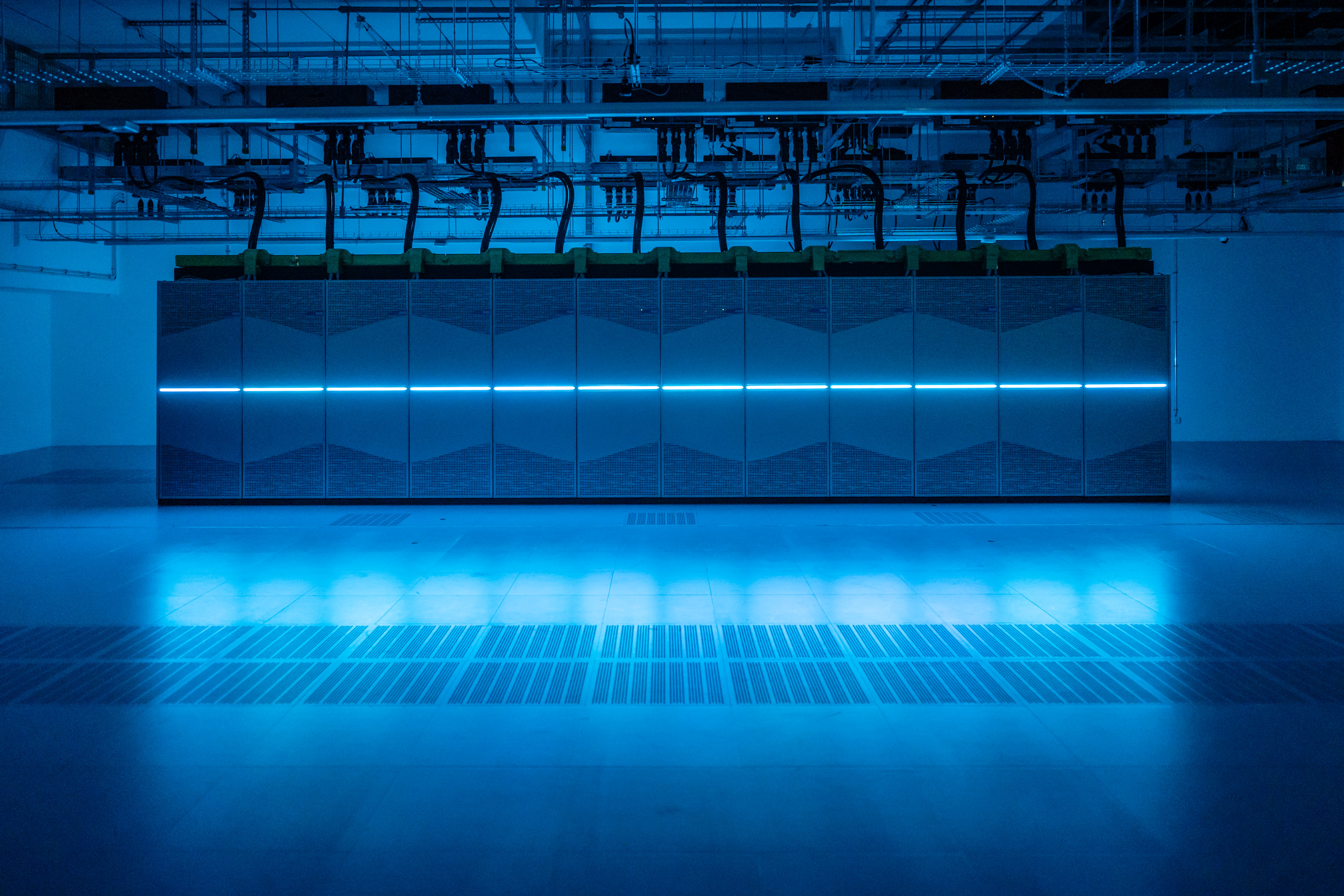
With Noctua 2 and Otus, Paderborn University has two supercomputers, through which the institution is a member of the NHR network. A total of 140,000 compactly integrated processor cores have been tackling highly complex tasks in the “Noctua 2” supercomputer since 2022. ‘Otus’ actually boasts twice the computing power. It is used, for example, to tackle problems in quantum research, Materials Science and sustainable energy technology. ‘Otus’ is also set to receive a significant performance boost soon: The purchase agreement with pro-com DATENSYSTEME GmbH for the expansion of the Lenovo system has already been finalised, with commissioning planned for the end of 2026. Over 12 million euros in state and federal funding is available for the expansion of computing capacity.
Further information and the option for registration can be found at: www.nhr-verein.de/events-trainings/nhr-conference/.
This text was translated automatically.