New research project by World of VR GmbH, Paderborn University and the Technical University of Cologne
Although clothing is an everyday part of life, it is also highly complex: it shapes identity, conveys social belonging and reflects societal and cultural developments. However, historical garments can only be experienced to a limited extent today. Many items are fragile, may no longer be worn or are not fully preserved. In the “HistoVeaR” research project, an interdisciplinary research team is developing new digital methods to realistically reconstruct and simulate historical clothing and make it accessible in virtual reality, as well as to adapt digitally reconstructed garments for use in games and visual effects for film and television.
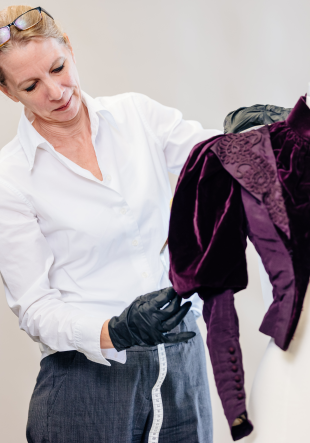
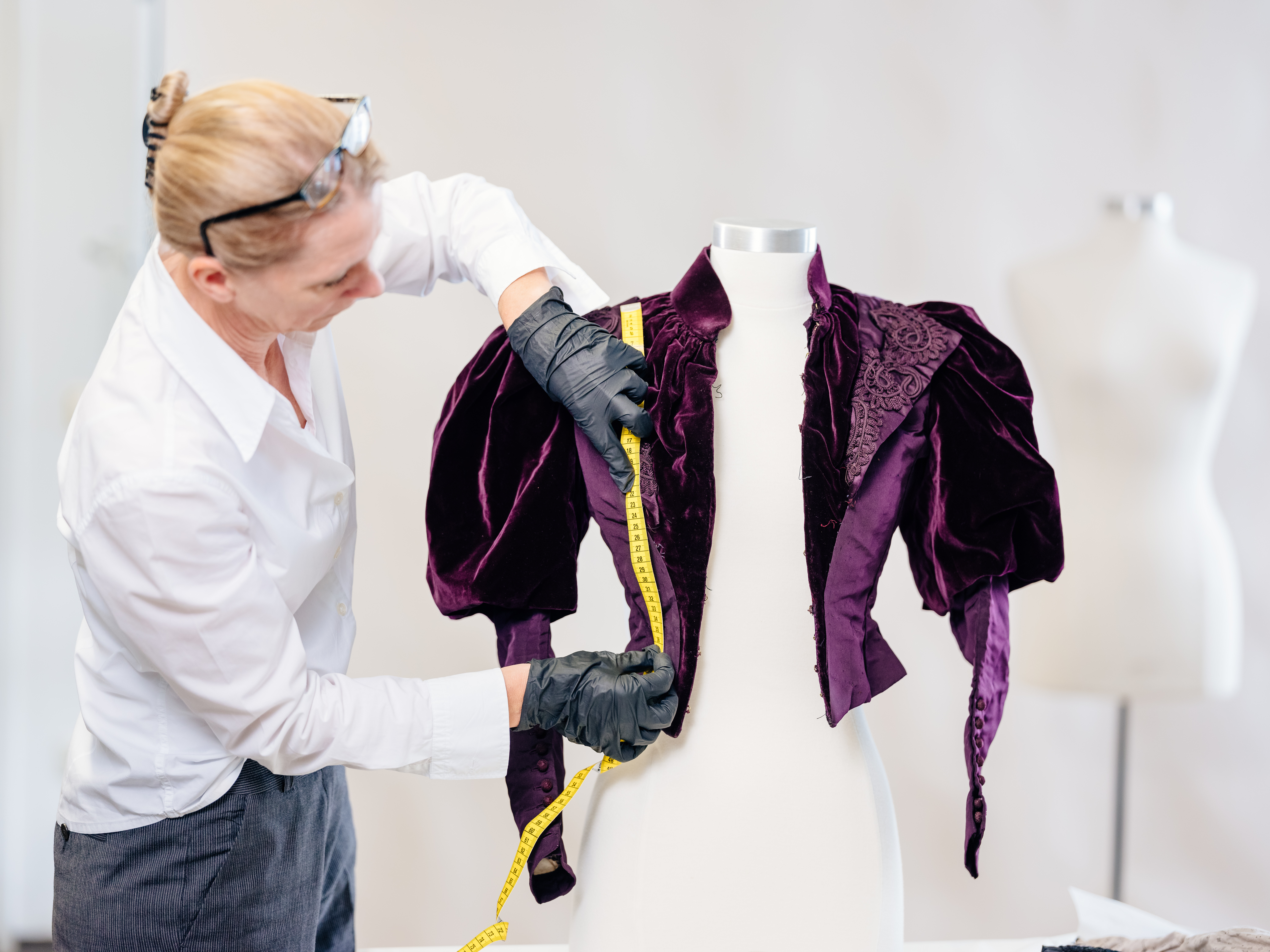
“Clothing only comes into its own when it interacts with the human body – through movement, the behaviour of the material and its shape,” says Prof. Dr Kerstin Kraft from the Faculty of Arts and Humanities at Paderborn University. “It is precisely this dimension that is often lost in museums, but also in digital productions such as games or films.” The aim of the HistoVeaR project is therefore to create digital twins of historical garments based on original objects, which move in real time, react physically accurately and can be used interactively.
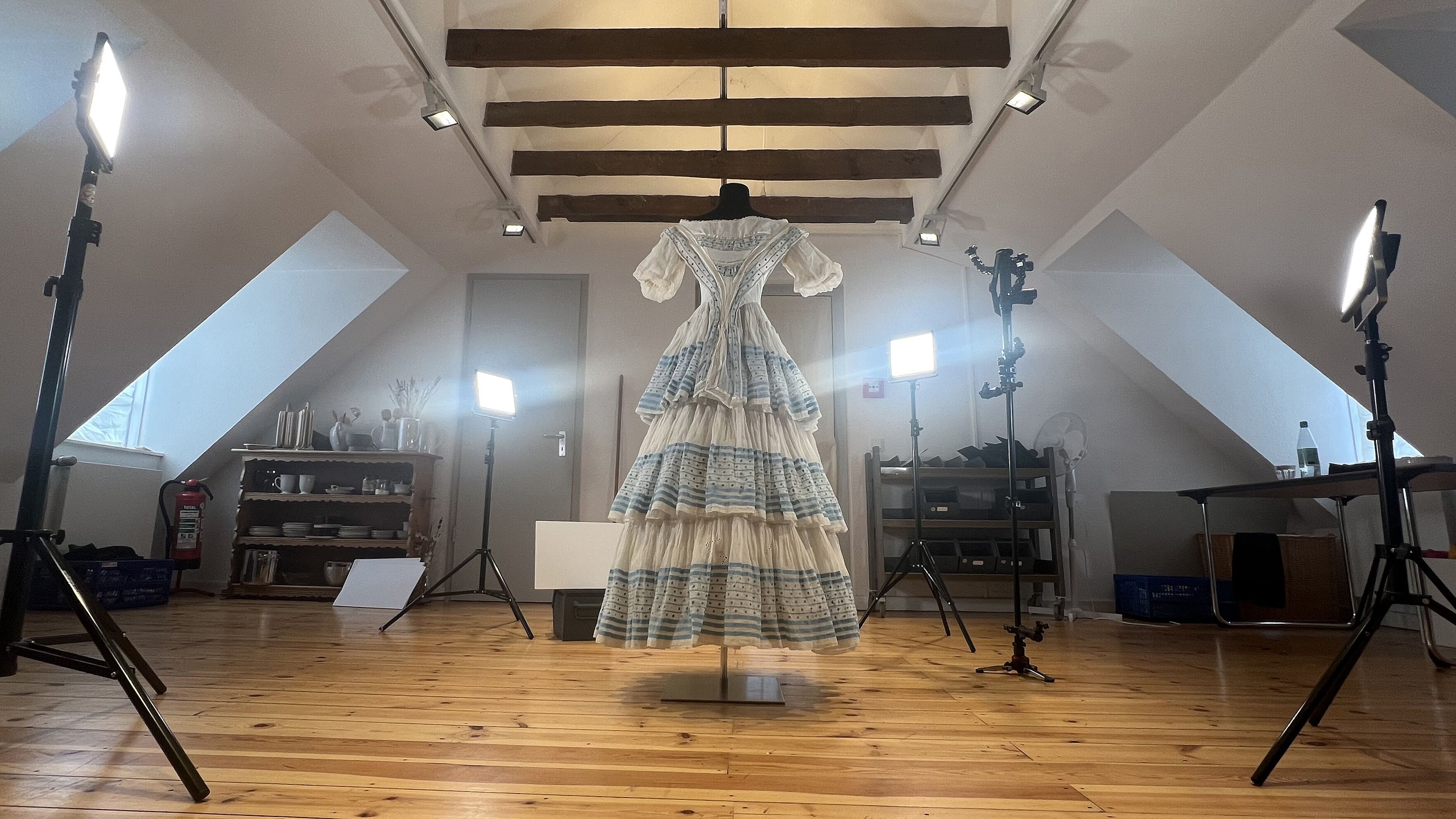
The project focuses on the design and implementation of an end-to-end process that enables the contactless digitisation, AI-supported simulation and animation of historical clothing. The aim is to realistically reproduce not only the cut and appearance, but also material properties such as weight, stiffness and drape. “Collision detection poses a particular challenge – that is, the realistic interaction between the body and clothing, as well as between multiple layers of fabric, for example in undergarments or multi-piece garments,” says Prof. Dr Arnulph Fuhrmann from the Institute of Media and Phototechnology at TH Köln.
User-friendly toolset for the creative industries
The project is being carried out by the Cologne-based XR company World of VR, the Technical University of Cologne and Paderborn University, which is contributing its expertise in textiles and cultural history and, amongst other things, selecting the original garments, creating patterns and laying the foundations for the digital reconstruction. World of VR GmbH is developing a modular, contactless scanning system and a 3D scanning process to capture the geometry, surface structure and colour of the garments and their corresponding avatars. At the Cologne University of Applied Sciences, a real-time, AI-based simulation, customisation and animation system will be developed, enabling the integration of the digitally captured clothing into VR, gaming and film environments.
“With HistoVeaR, we aim to help make cultural heritage more accessible whilst also providing new tools for the creative industries,” explains Prof. Björn Bartholdy from the Cologne Game Lab at TH Köln. “The planned system is designed to be flexible and to deliver high-quality results with as little manual effort as possible – in other words, it should be easy for potential users to get started with.” In a museum, for example, visitors could use VR headsets to try on historical garments in a virtual simulation environment, look at themselves in the mirror and move around the room, as Bartholdy goes on to explain.
About the project
The research project ‘AI-reconstructed historical clothing in virtual reality for museums, games and film productions’ (HistoVeaR) is being carried out under the consortium leadership of the Cologne-based mixed reality specialist World of VR GmbH (project lead: Tobias Kemper). The consortium includes Prof. Dr Arnulph Fuhrmann from the Institute of Media and Phototechnology, Prof. Björn Bartholdy from the Cologne Game Lab (both at TH Köln) and Prof. Dr Kerstin Kraft from the Faculty of Arts and Humanities at Paderborn University.
The project is being funded with around 1.5 million euros until the end of May 2028 as part of the “NEXT.IN.NRW” innovation competition by the Ministry of Economic Affairs, Industry, Climate Protection and Energy of the State of North Rhine-Westphalia, and is co-financed by the European Union.
This text was translated automatically.