
- E-Mail:
- cem.okulmus@uni-paderborn.de
- Web:
- Homepage
- Social Media:
- Office Address:
-
Fürstenallee 11
33102 Paderborn - Room:
- F2.108
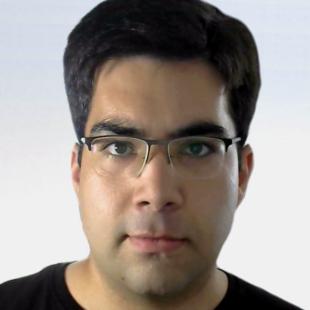
About Cem Okulmus
I currently work as a PostDoc in the Knowledge Representation group at Paderborn University led by Anni-Yasmin Turhan. My recent work has focused on exploring learnability of constraints over graph-structured data in the context of RDF and SHACL.
Previously I was a postdoctoral fellow at Umeå University where I worked with (then) WASP guest professor Diego Calvanese on the topic of temporal ontology-based data-acess (OBDA).
I completed my PhD at TU Wien, where my thesis focussed on exploring the practical computation of structural decomposition methods for relational queries.
Topics I am interested in include
- Learnability/Seperability in various languages over graph-structured data
- Temporal Ontology-Based Data Access
- Ontology-Mediated Query Answering for Graph Queries
- Shape Constraint Langauges
- Structural Width Measures over Hypergraphs
Curriculum Vitae
Since 03.02.2025: Paderborn University
PostDoc, In the Group of Knowledge Representation group of Prof. Anni-Yasmin Turhan
16.01.2023 - 13.01.2025: Umeå University
WASP Postdoctoral fellow, In the Group of Diego Calvanese, (then) WASP guest professor, Umeå, Sweden
03.09.2018 - 28.11.2022: TU Wien
PhD in Computer Science, Supervised by Reinhard Pichler
05.10.2015 - 15.06.2018: TU Wien
Master Programme - Logic and Computation, Vienna, AT
07.10.2012 - 15.04.2015: University of Innsbruck
Bachelor of Computer Science, Innsbruck, AT
Publications
Latest Publications
Selective Use of Yannakakis’ Algorithm for Consistent Performance Gains
D. Böhm, G. Gottlob, M. Lanzinger, D.M. Longo, C. Okulmus, R. Pichler, A. Selzer, in: Proceedings of the 28th International Workshop on Design, Optimization, Languages and Analytical Processing of Big Data (DOLAP 2026), Tampere, Finland, 2026.
Common Foundations for Recursive Shape Languages
C. Okulmus, S. Ahmetaj, I. Boneva, J. Hidders, M. Jakubowski, J.E. Labra Gayo, W. Martens, F. Mogavero, F. Murlak, Ognjen Savković, M. Šimkus, D. Tomaszuk, in: Proceedings of the 23rd International Conference on Principles of Knowledge Representation and Reasoning (KR 2026), 2026.
Querying Interval-Based Temporal Data with SPARQL
J. Corman, R. Kontchakov, C. Okulmus, in: Proceedings of the 33rd International Symposium on Temporal Representation and Reasoning (TIME 2026), 2026.
Reaching for the Stars in EL Concept Learning
B. Gortworst, C. Okulmus, M. Ortiz, A.-Y. Turhan, in: Proceedings of the 39th International Workshop on Description Logics (DL 2026), 2026.
Shapes from Examples: Foundations of Shape Learning in Recursive SHACL
B. Gortworst, C. Okulmus, M. Ortiz, A.-Y. Turhan, in: Proceedings of the 25th International Semantic Web Conference (ISWC 2026), 2026.
Show all publications
Teaching
Current Courses
- Proseminar: Perlen der theoretischen Informatik
Scientific Engagement
2026 | PC member of the 23rd International Conference on Principles of Knowledge Representation and Reasoning
PC member of the 23rd International Conference on Principles of Knowledge Representation and Reasoning
2025 | PC member of the 28th European Conference on Artificial Intelligence
PC member of the 28th European Conference on Artificial Intelligence
2025 | PC member of the 19th edition of the European Conference on Logics in Artificial Intelligence
PC member of the 19th edition of the European Conference on Logics in Artificial Intelligence
2024 | PC member of the 21st International Conference on Principles of Knowledge Representation and Reasoning
PC member of the 21st International Conference on Principles of Knowledge Representation and Reasoning
2023 | PC member of the 18th Edition of the European Conference on Logics in Artificial Intelligence
PC member of the 18th Edition of the European Conference on Logics in Artificial Intelligence