Risk factor for heart valve dysfunction
In chemical plants, pipework or on artificial heart valves, thin layers of proteins, polymers or other substances are continuously deposited. Experts refer to this process as ‘fouling’. These deposits impede mass transfer or restrict flow. In medicine, this can lead to functional impairments with serious consequences for patients. In industry, these deposits disrupt production processes and drive up maintenance and energy costs. To date, there has been a lack of suitable models and data to reliably predict the complex interplay between surfaces, liquids and flows in real time. Scientists at Paderborn University are therefore developing a machine learning model as part of the ‘ML4Fouling’ research project to predict these unwanted deposits on medical and industrial products. The interdisziplinäre team is combining laboratory experiments, computer simulations and machine learning to enable the systematic prediction of fouling across different materials, fluids and flow conditions. In doing so, they are laying the foundations for smarter materials and more energy-efficient industrial processes. The project was awarded the University’s 2026 Research Prize.
Machine learning as a bridge between the microscope and reality
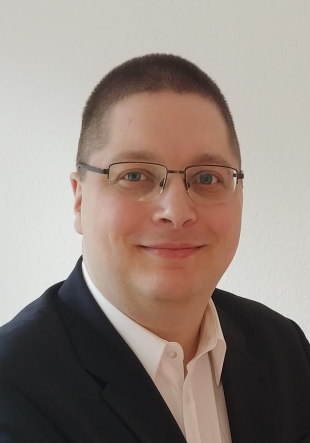
“In ML4Fouling, we use algorithms that derive patterns from huge amounts of data. This data comes from two sources: experiments and simulations,” explains Prof. Dr Martin Brehm, Head of the Chair of Theoretical Chemistry at Paderborn University. In precise laboratory measurements, the researchers allow electrolyte solutions to flow over rotating metal discs and measure how electrical resistances change at the interface. “This approach provides new insights into the combined influence of surface chemistry and hydrodynamics on the preventability of fouling. In addition, computer simulations at the atomic level provide important insights,” Prof. Brehm continues. A new methodological approach adapts these computational techniques so that they also apply to fouling issues. The model then links these two sets of data. It calculates how molecular interactions at the interface, under flow conditions, affect macroscopic fouling. The team is thus developing a model that goes beyond a purely experimental or simulation-based approach.
From molecules to heart valve models
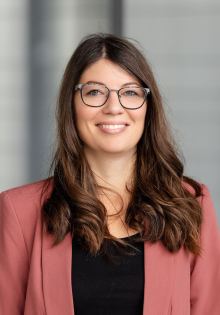
The researchers validate their predictions using practical examples. To do this, they utilise, amongst other things, a microreactor for polymer production. “In chemistry, a microreactor is a particularly small reactor in which substances react with one another under precisely controlled conditions – for example, during the production of polymers. With the aid of sensors, we can continuously monitor when and where the first deposits form on the surfaces,” explains Dr Vanessa Neßlinger, head of the Polymers and Interphases in Technical and Macromolecular Chemistry research group and initiator of the project. Medical applications will follow later. To this end, the team plans to use a three-dimensional heart model produced by a 3D printer. It replicates the flow conditions of a real heart valve. The computational model assesses how different materials perform under blood flow.
Bold ideas for science
The scientists have received the Paderborn University Research Prize for their project. The university management awards this prize, worth 140,000 euros, in recognition of exceptional research projects outside the mainstream, thereby promoting bold ideas for science. “The project goes far beyond pure basic research. It provides tools for materials development that can be used by implant manufacturers and plant engineers alike. The researchers are thereby reducing the need for costly trial-and-error testing. At the same time, they save energy and raw materials by optimising processes from the outset. With this forward-looking approach at the interface of theoretical chemistry, technical chemistry and data science, dangerous risks can be addressed at an early stage,” says Prof. Dr Thomas Tröster, Vice-President for Research and Academic Careers at Paderborn University.
First results as early as next year
“The biggest hurdle remains the huge gap between different time scales. Experiments run in seconds, whilst simulation cycles run in nanoseconds,” explains Dr Robert Schade, who, as a research associate at the Paderborn Centre for Parallel Computing (PC2), brings AI and data expertise to the project. The team is circumventing this problem by incorporating physical laws directly into the ML model. This prevents the system from operating purely statistically and producing false trends. Initial tests are already under way. Once the model is operating reliably, it will open up new possibilities for biosensors, filtration systems and new protective coatings. The team expects to see the first results next year.
This text was translated automatically.