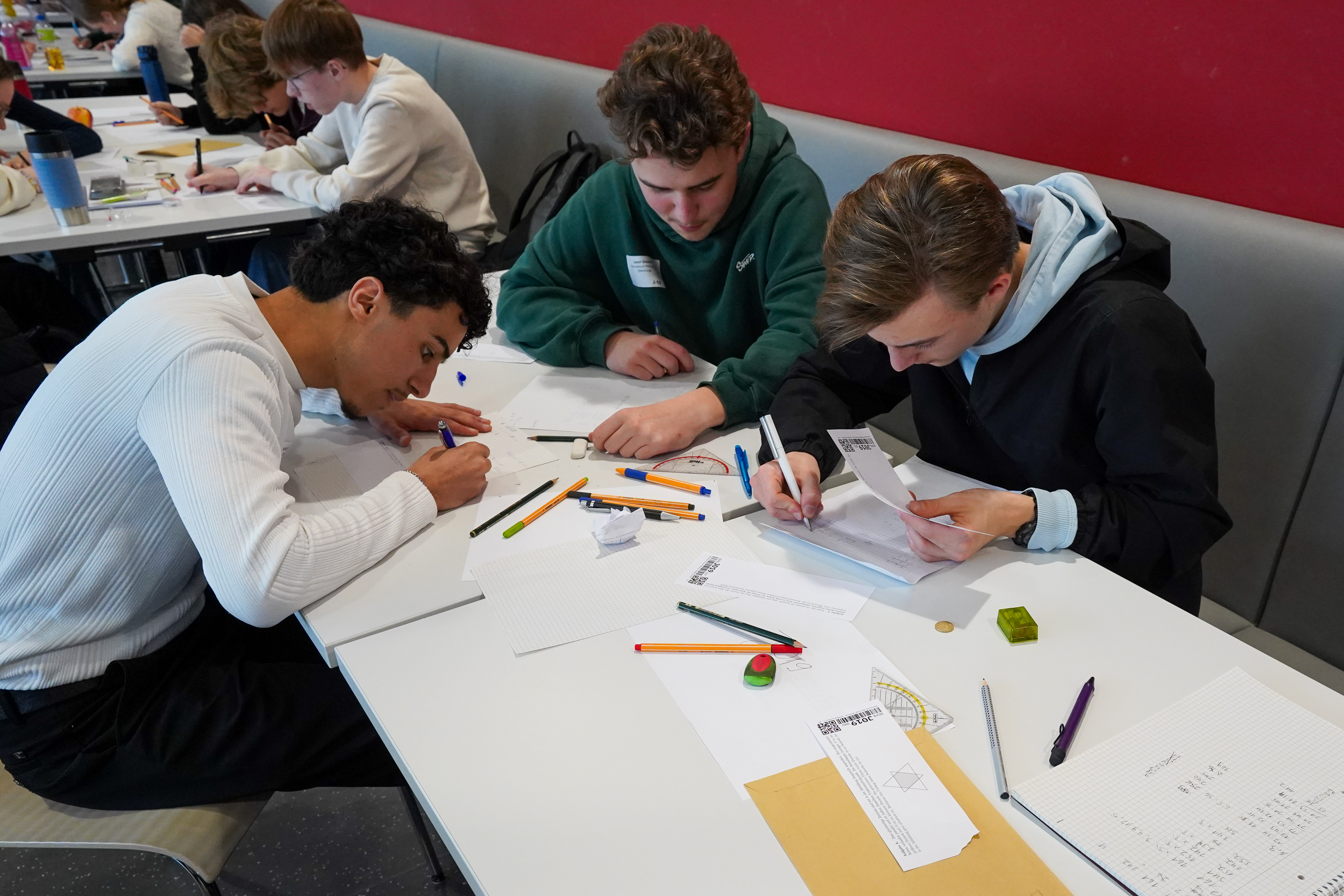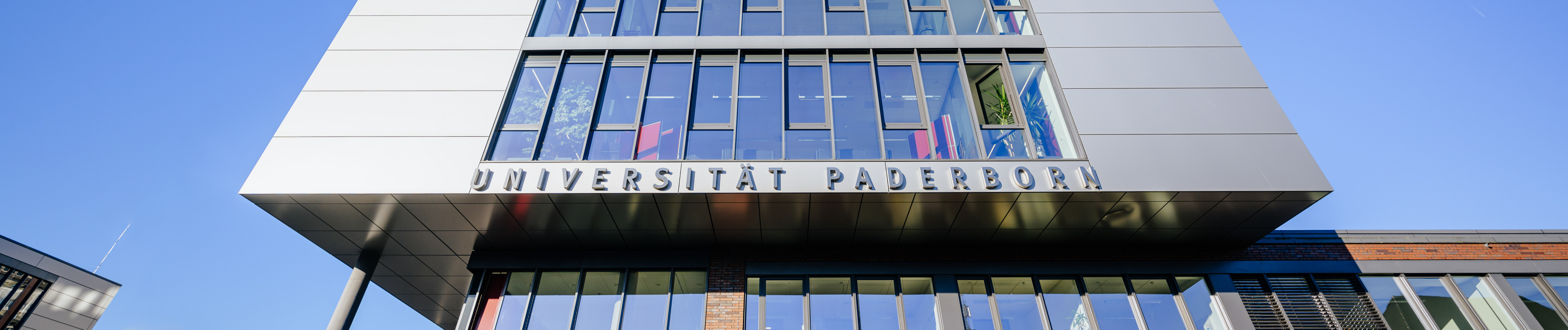
To coincide with International Mathematics Day, the international mathematics competition "Náboj" took place for the first time at Paderborn University on Friday, 13 March. Paderborn was one of six locations in Germany. Starting at 10 a.m., 200 students gathered in the university's Mensa (cafeteria and dining hall). In contrast to traditional Mathematics Olympiads, they did not compete against each other alone, but in teams. This meant that not only the individual skills of the members were decisive for success, but also efficient teamwork. The competition lasted two hours, during which the participants tried to complete as many tasks as possible - without using a calculator. In the end, the team that solved the most questions correctly won.
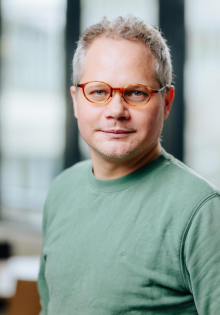
"Náboj" has been held regularly at various locations around the world since 2005. In addition to Germany, 15 other countries were represented this year, including Sweden, Estonia, Hungary, Morocco and Uzbekistan. The special thing about this competition is that the teams compete at all locations at the same time and are given the same tasks. Although the results are analysed at a local level, this allows the students to compare themselves internationally. At Paderborn University, the event was organised by Prof. Dr. Martin Kolb, Dr. Max Hoffmann and Dr. Benjamin Hinrichs from the Institute of Mathematics. It was also supported by the Institute of Mathematics as well as the "Stochastics" working group and the science communication team of the Collaborative Research Centre/TRR 358 "Integer Structures in Geometry and Representation Theory". Prof. Kolb emphasises: "We are very pleased that we were able to host the competition in Paderborn as the only location in North Rhine-Westphalia. With events like this, we want to contribute to the promotion of young talent and give pupils the opportunity to experience their enthusiasm for Mathematics together."
The competition is designed for secondary school students in grades 9 to 13, and talented students in grade 8 are also admitted. The teams compete in two categories, juniors and seniors. The members of the junior teams must not be in the penultimate or final year of secondary school, while the senior teams can be made up of students from any year. In Paderborn, 20 junior teams and 19 senior teams, each with three to five members, competed against each other. At the start of the competition, each team was given six tasks. As soon as one was solved, the next one followed. In contrast to the exercises at school, where usually only one specific method is used, the tasks in the competition required more logical thinking and ingenuity. The award ceremony took place immediately afterwards: The first ten places received a T-shirt and the winners from Johanneum Gymnasium in Wadersloh (juniors) and Maria-Wächtler-Gymnasium in Essen (seniors) also received backpacks from Paderborn University.