After more than three years of work, the project partners of NALYSES ("Sustainability-optimised life cycle assessment of technologically highly complex mechatronic products") have presented their results. The project, funded by the German Federal Ministry of Research, Technology and Space (BMFTR), developed methods and technologies to significantly reduce the ecological footprint of complex mechatronic products and make them fit for the circular economy. The "Control Engineering and Mechatronics" department of the Heinz Nixdorf Institute at Paderborn University made a decisive contribution to the project's success.
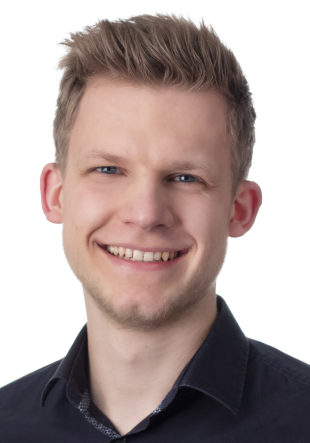
To ensure a successful transfer into practice, the project participants worked on a sophisticated modern automotive headlight as an example. The scientists at the Heinz Nixdorf Institute developed algorithms for the dynamic and energy-efficient adjustment of light distribution. This enabled them to significantly reduce the energy consumption of matrix LED headlights during the utilisation phase. "By integrating 3D environment models and analysing virtual sensor data, we were able to implement a control algorithm that forms the basis for efficient lighting while driving," explains Niklas Fittkau, research associate at the Heinz Nixdorf Institute.
In addition to the Heinz Nixdorf Institute, FORVIA HELLA (consortium leader), the BMW Group, Covestro AG, the geba Group, Hamm-Lippstadt University of Applied Sciences and the Fraunhofer IEM were also involved in the project. The consortium worked together on solutions for a closed product life cycle, taking into account aspects such as material composition and disposal. In the end, they were able to present a headlamp with acarbon footprint that is 52% lower than the models currently in use.
At FORVIA HELLA and the BMW Group, the project results are to be incorporated into the development of future generations of headlights. "The collaboration in the NALYSES project shows us how sustainability must become an integral part of engineering in the automotive industry. This is best achieved when the right data and methods are available in a practical digital twin," says Dr Mathias Niedling, Head of Sustainability Lighting at FORVIA HELLA.
This text was translated automatically.