International Women's Day has been held since 1911. On 8 March, people around the world demonstrate for equal rights and a self-determined life. Among other things, they demand equal opportunities in everyday working life, equal pay for equal work and the division of care work. At demonstrations and events, they draw attention to gender inequalities that are evident in various areas. These differences also occur among female start-up founders.
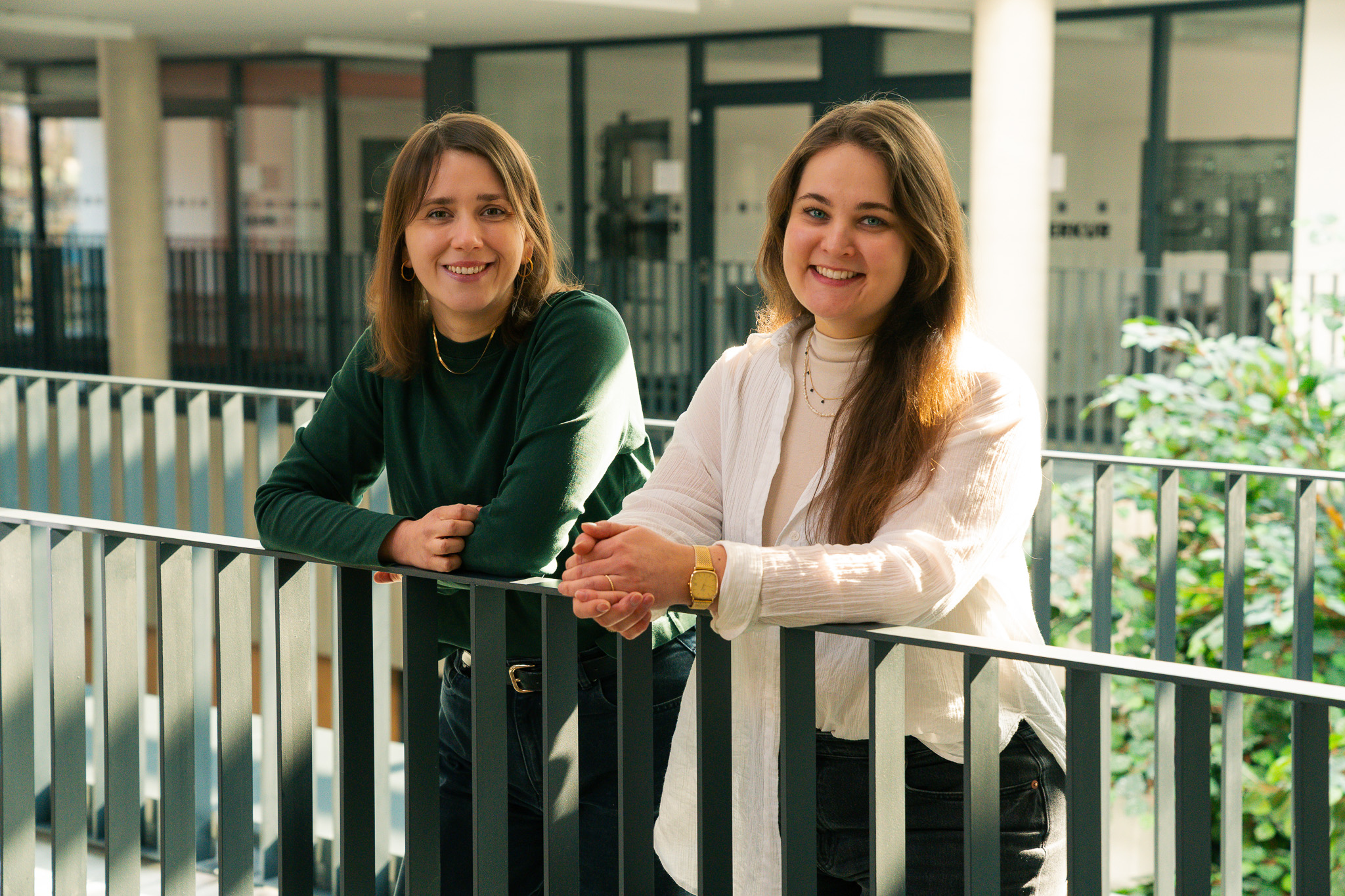
Katharina Guth and Jil Schlüter are start-up coaches at garage33, Paderborn University's start-up centre, and discuss this in an interview. Among other things, they explain why fewer women are starting up and what role universities play in this context.
According to the Female Founders Monitor 2025, a study by the Startup Association and the Bertelsmann Foundation, the proportion of female founders in Germany is around 19 per cent. Why do women found significantly fewer start-ups than men?
On the one hand, women still face structural barriers when starting up, such as access to funding, networks or role models. As before, 91 per cent of all investments go to all-male teams and the start-up scene is generally very male-dominated. In addition, there are social expectations and unequal burdens, e.g. due to care work, i.e. family care, nursing and responsibility. These are factors that make the decision to start-ups and entrepreneurship more difficult. On the other hand, women often start up in sectors that attract less venture capital, even though they are highly relevant to society, such as education, sustainability or the social sector. As long as the framework conditions are not equal, female entrepreneurship remains underrepresented - despite high motivation and expertise.
During the start-up coaching sessions, you advise people with many different ideas and visions. Do you also notice differences in the topics or issues that women and men come to you for advice?
During counselling, it is noticeable that female founders have often been carrying their ideas around with them for a long time, prepare them very carefully and place a strong focus on meaning, sustainability and social added value. They are motivated by problems that affect them personally and are more cautious in their assessment of what is realistically achievable, even though their chances of success are objectively no lower. Men, on the other hand, are more often motivated by a purely economic perspective and tend to formulate ambitious goals very aggressively at an early stage. They also focus on technological scalability, the automation of processes and the development of market-changing innovations. Accordingly, they are more present in areas such as logistics, Electrical Engineering and Mechanical Engineering. They also tend to talk about financing and growth earlier, while women usually emphasise team and value issues more strongly. Numerous studies now show that these perspectives complement each other and that gender-diverse teams are therefore particularly successful.
More than half of start-up founders have a university degree. This makes students a key group when it comes to future founders: What role do universities play in encouraging and supporting more women to start-ups and entrepreneurship?
Universities play a central role when it comes to making start-ups and entrepreneurship visible as a career option and also presenting female role models. This is important because while 40 per cent of male students are considering starting a business, according to the Female Founders Monitor 2025, this figure is currently only 21 per cent for women. This is where enthusiasm can be awakened early on and women can be encouraged to try out their ideas. It is important to create spaces where mistakes are allowed and dialogue takes place at eye level - whether through female founder networks, mentoring or practical formats. The more open and accessible start-up support is, the more students will actually dare to take this step. At garage33, we offer a space where female founders can exchange ideas, form a network and receive support, e.g. through open consultation hours and advice on funding opportunities.
What advice can you give to young women who want to set up a start-up?
There will be days when the "imposter syndrome" comes knocking loudly, i.e. the fear of not being good enough and only appearing competent. This is completely normal. The difference between those who start up and those who don't is not the absence of fear - but the decision to do it anyway. It helps to create a clear picture of your own strengths. This is because many female founders underestimate their existing competences. A structured look at experience, skills and challenges that have already been overcome creates self-confidence. It also helps to make contact with a supportive network early on and to look for role models. The exchange with other female founders lowers the inhibition threshold because worries are normalised and concrete solutions become visible.
Further information on start-up coaching can be found on the garage33 website.
This text was translated automatically.