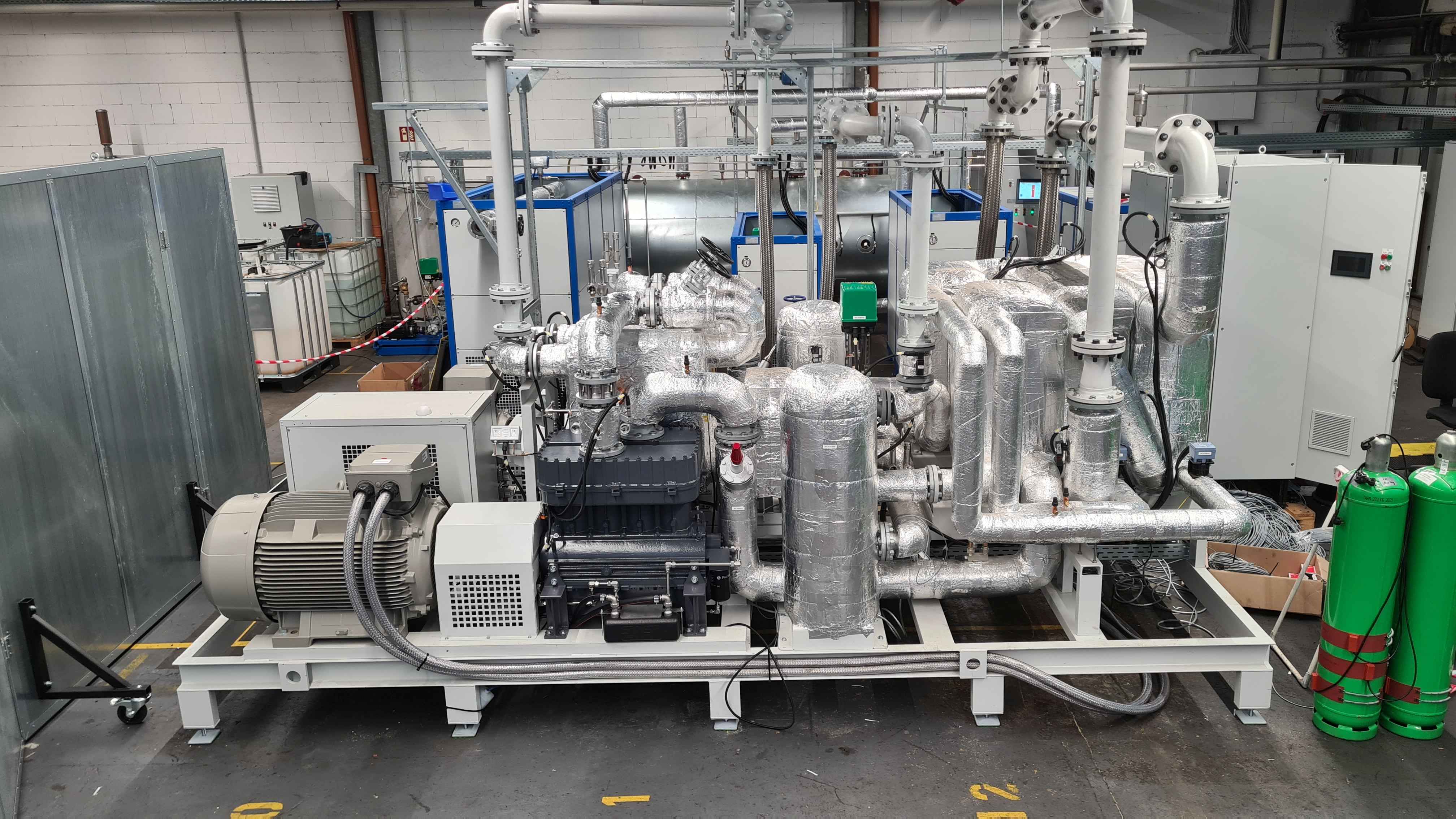
High-temperature heat pumps for vapour generation are increasingly in demand, particularly in industry, to raise waste heat to a temperature level that can be used in processes. The heat pumps required for this must fulfil modified requirements in order to be able to provide the required temperature and pressure level in the form of steam.
In order to experience the necessary technology first-hand, a team from Limón GmbH and Paderborn University recently visited the manufacturer SPH Sustainable Process Heat from Overath near Cologne.
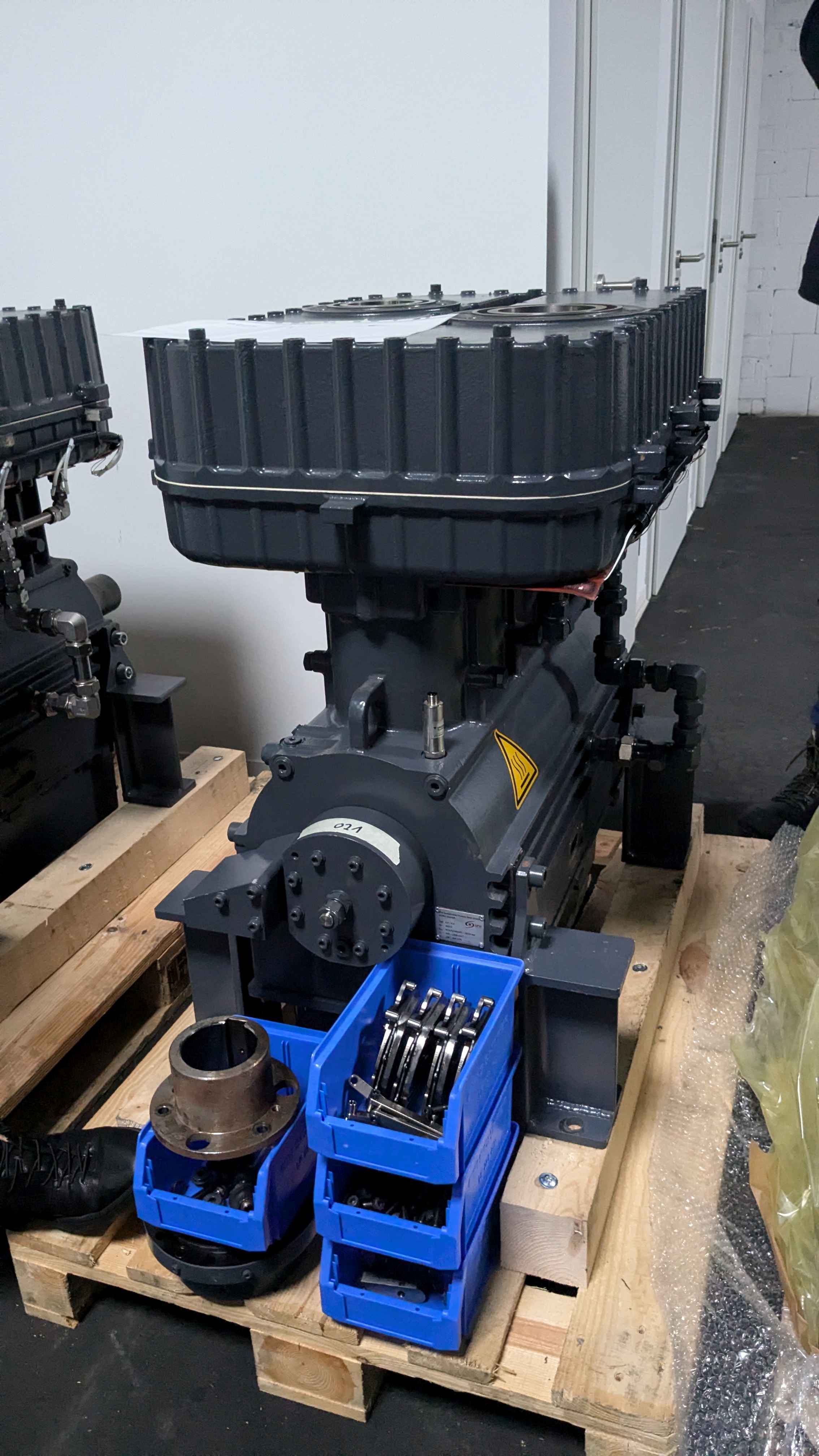
They were able to see a vapour heat pump in live operation, which was put through its paces on the test bench. In a direct link to the SPH team led by Tim Hamacher, one of SPH's managing directors, it was possible to discuss not only the strengths and areas of application of the technology, but also what is particularly important in terms of design and installation. SPH manufactures high-temperature vapour heat pumps in the field of up to one megawatt heat output, thus serving an important performance class for small and medium-sized industrial companies. The company also specialises in the production of patented compressors for particularly high temperature lifts.
The heat pumps currently in operation work in a temperature range up to around 160°C (corresponding to 6 bara), in which many process steps can already be adequately supplied. One example of this is the paper industry, where warm air from the drying process can be used for vapour preparation - again for drying. However, in a cascade with mechanical vapour recompression (MVR), the pharmaceutical manufacturer Takeda in Vienna even achieves a pressure of 14 bara (corresponding to 195°C) and provides around 2.3 tonnes of steam. In the medium term, SPH is aiming for temperatures of up to 200°C directly via the heat pump.
SPH, with the participation of Spirax Sarco, is characterised by the particular flexibility with which it can respond to the customer's project requirements. These can be special requirements for heat exchangers and the design of the compression, for example, to take into account particularly demanding swelling and sinking media or a very high temperature range of up to 75K (95 K incl. heat exchanger gradient).
SPH is a project participant in the BMWK research project, HeatTransPlan, alongside Limón and Paderborn University. Together with partners from research, development and planning, 12 case study partners in the industrial sector are identifying areas of application for high-temperature heat pumps. The potential use of the heat pumps is preceded by a detailed environment and process analysis, for which specially developed process analysis systems based on process mining and process integration are to be used. This is followed by the technical and economic planning of the systems.