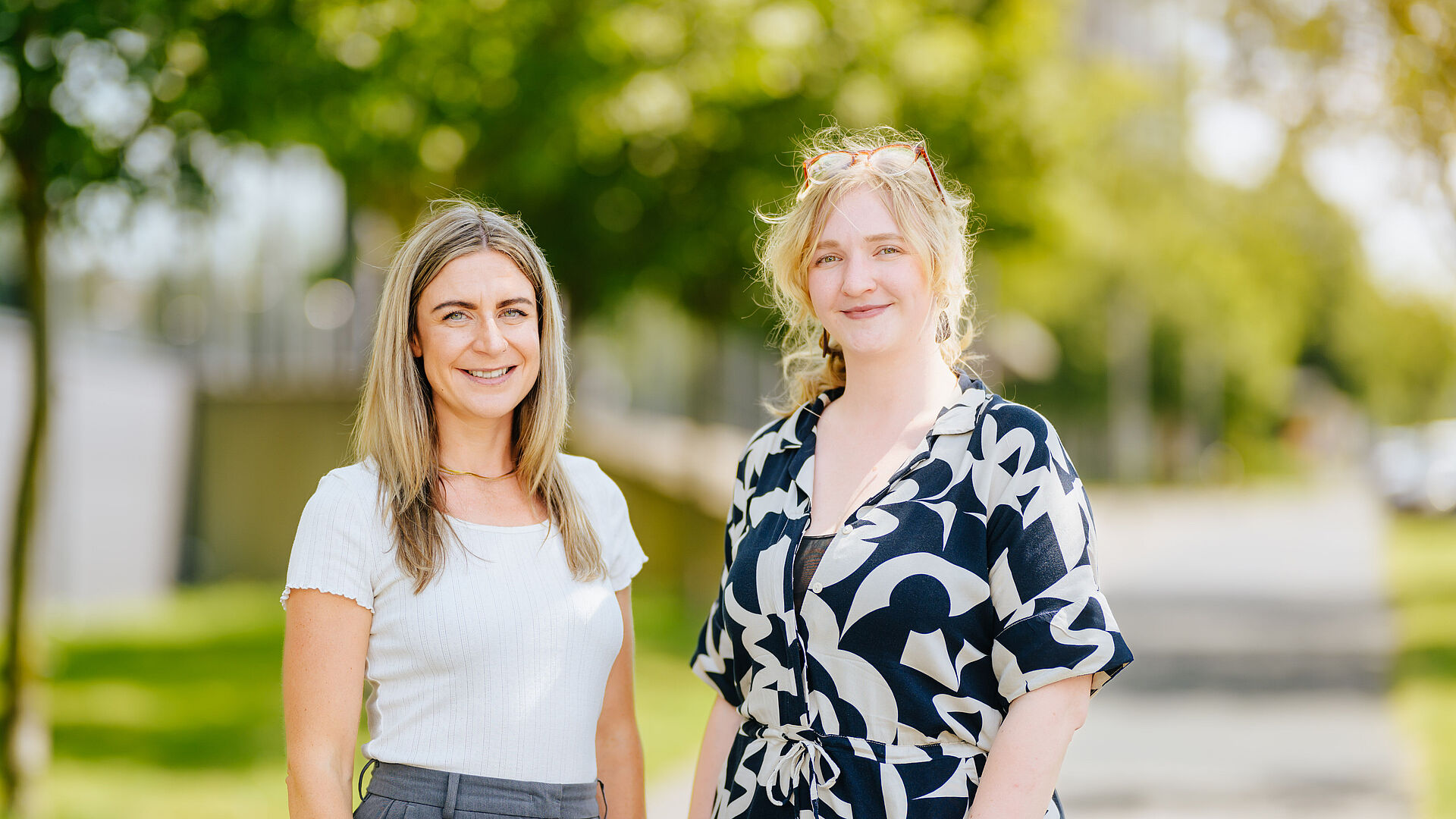
Paderborn University's Translation Office
Paderborn University's campus is characterised by interculturality and diversity. In order to further expand its welcome culture, Paderborn University has set itself the goal of providing key information and documents for international students and academics in English and in German. By translating key German texts into English, post-editing machine-generated English translations, and proofreading English-language content, the Translation Office supports the ongoing internationalisation process.
FAQs
We do not translate:
- academic texts (applications for third-party funding, academic publications, dissertations, theses)
- documents from individual faculties and internal faculty units (exception: faculty regulations, doctoral degree regulations, habilitation regulations – as a non-binding courtesy translation)
- examination regulations
- documents of legal nature, including:
- translations that require certification or notarisation (for example, certificates, contracts for authorities, and notarised documents)
- legal texts, court decisions, or complex contractual documents
- documents that require specific legal expertise
- documents for students (including degree certificates, diplomas, transcripts of records, etc.)
- translations into languages other than English
We are happy to advise you in your search for external translators, for example for certified translations or specialist transtaions with a legal focus.
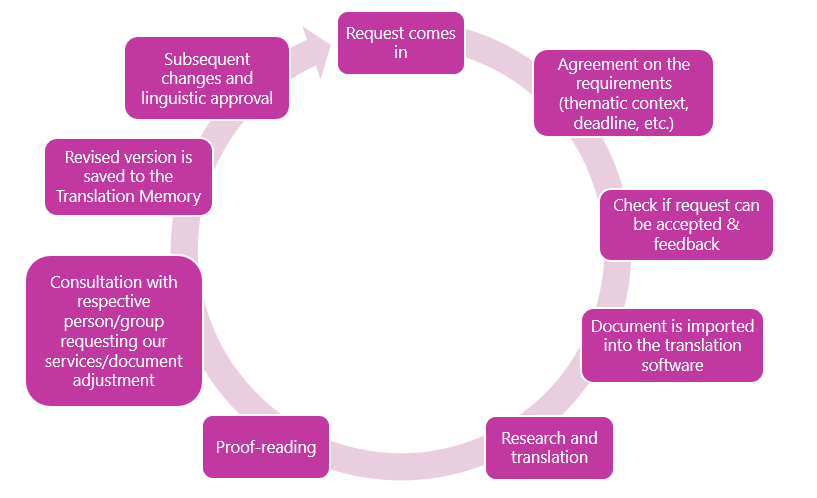
If your translation request fulfils the requirements to be processed by our Translation Office (see ‘What do we translate?’), you can send us a translation request.
Your request should generally include:
- a brief description of the content to be translated
- a Word document of the file to be translated, if possible
- a deadline by which the translation should be completed
Please contact translations@upb.de with your translation request. After checking whether we can accept the request, we will get back to you as soon as possible.
For machine translations (e.g. of website content or similar), we recommend:
UPB AI-Chat
- First translate your texts in Paderborn University’s AI-Chat (only available in German).
There, you can choose between two models:- GWDG (with UPB glossary, De→En) – recommended for content relevant to data protection
- OpenAI (with UPB glossary, De→En) – often delivers stylistically optimised results
- Advantage: the models take into account the official German-English UPB Glossary (e.g. technical terms, and institute names) and deliver more consistent results.
- Then insert the translated text into the desired target format (e.g. TYPO3 backend, Word document, or other publication formats), and check the formatting.
- Instructions for using the LLM models in UPB's AI-Chat can be found in the ZIM AI portal (link coming soon).
DeepL in the TYPO3 backend
- If you would like to work directly in TYPO3, use the DeepL plugin.
- Please note: At present, the official German-English UPB Glossary is not taken into account.
- Instructions for using DeepL in the TYPO3 backend can be found in the ZIM HelpWiki (only available in German).
Important: Do not use machine translation for texts that are legally relevant or have a high external impact, for content that carries particular risks, or for sensitive data (e.g. personal information). In such cases, we are happy to support you personally or help you find a professional external translator.
Our Scope of Work
Alongside translating central documents and information from Paderborn University into English, we work on maintaining and further developing our English terminology. This involves continuously updating our German-English Glossary, establishing key terms in consultation with the relevant offices and maintaining our terminology database. The everyday work of a translator is shaped by diverse and varied responsibilities. Would you like to know more about how our Translation Office operates? Our presentation “The Translation Office of Paderborn University – International Tuesdays”¹ offers insights into our structures, processes, and services.
¹This presentation is based on information current as of July 2024. As our processes continue to evolve, it reflects the situation at the time it was created.
The German-English Glossary
Is “Dezernat” translated as “division” or “department”? What is the official translation for “Universität Paderborn”?
You can find the answers in the German-English Glossary. The Glossary is continuously updated and amended in consultation with the respective organisational units. Would you like a term or phrase to be included in the Glossary? If so, please e-mail us at: translations@upb.de.
Editorial Guide for Web Content
How do you write a date in an English text? Does our University use British or American English? Do we say “9 a.m.” at UPB, or rather “9 am”?
You can find answers and support on the correct formatting and wording of English-language texts at Paderborn University in the Editorial Guide for Web Content.